
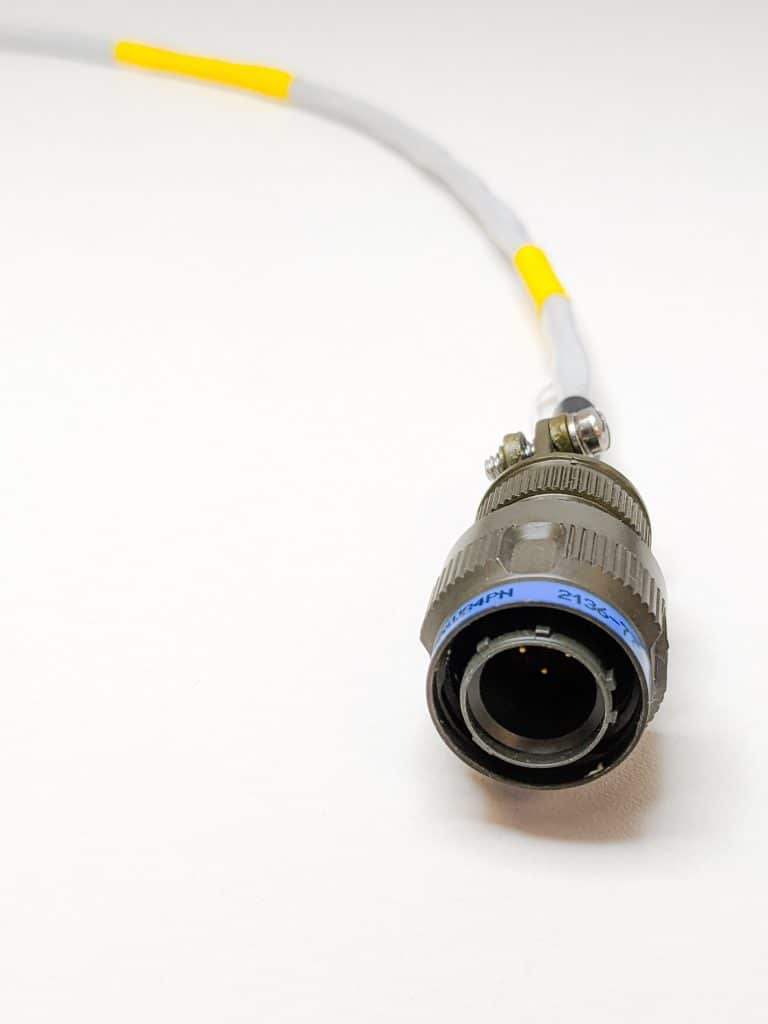
Sensors are essentially the nervous system of modern industry. Every smart system, from your phone and car to production lines and healthcare equipment, relies on signal transmission, meaning the global sensor cable market is projected to grow rapidly. But what’s driving this surge? And why are sensor cables suddenly mission-critical? In this blog, we will decipher the growing market demand for sensor cables in key industries like energy, automotive, and manufacturing.
What Are Sensor Cables and Why Do They Matter?
Sensor cables are specialised, optical or hybrid cables designed to connect sensors and transducers to control systems like PLCs, instrumentation, or data acquisition units. They are different from control units, which act as the ‘brain’, processing data to send high-voltage commands to motors and actuators. Sensor cables play a vital role in:
- Monitoring temperature, pressure, motion, and position
- Enabling automation systems to respond in real time
- Maintaining safety and operational efficiency
Shielded vs Unshielded Cables
Shielding is an important consideration when it comes to sensor cables, as it protects against electromagnetic interference (EMI).
- Shielded cables – protect signals in high-interference environments like factories.
- Unshielded cables – more suitable for less demanding applications.
In modern applications, minor signal interference or cable failure can result in downtime, safety risks, and data inaccuracies, which is why shielding is critical for high-interference environments and is becoming the standard choice in most industries.
Key Drivers Behind Market Growth
There is a rapid growth in the sensor cable market, and it is being fuelled by several major global trends.
Industry 4.0 and Automation
Industry 4.0 refers to the fourth industrial revolution, which describes the growing trend of automation and data exchange in technology and processes, specifically within the manufacturing industry, including:
- The internet of things (IoT)
- The industrial internet of things (IIoT)
- Cyber-physical systems (CPS)
- Smart manufacture
- Smart factories
- Cloud computing
- Cognitive computing
- Artificial intelligence
All of which rely on continuous data exchange between machines, sensors, and control systems, essentially making sensor cables the backbone of many industries.
IoT and Smart Infrastructure
The Internet of Things (IoT) refers to a network of physical objects embedded with sensors, software, and technologies that connect and exchange data with other devices and systems over the internet. This includes things:
- Smart home appliances – thermostats, lighting, security systems, etc.
- Industrial – manufacturing sensors, etc.
- Smart cities – traffic flow management systems, energy consumption management, etc.
- Wearables – smart watches, health trackers, etc.
All of these depend on robust, high-performance cabling to maintain data integrity.
Demand for Durability
Industries with harsh environments are pushing equipment into increasingly extreme conditions, such as:
- Offshore wind farms
- Oil & gas operations
- High-temperature manufacturing
This drives demand for cables that can withstand heat and cold, moisture and chemicals, and mechanical stress.
Automotive Industry
There is a rapid shift towards electric vehicles and autonomous driving, which requires high-speed data transmission, complex safety features, and real-time monitoring. EVs have around 70-100 sensors and up to 200 in autonomous models, making sensor cables critical for safe and efficient steering, braking, and navigation.
Advanced Driver Assistance Systems (ADAS)
Modern vehicles are starting to increasingly include:
- Cameras
- Radar systems
- LiDAR sensors
These technologies require fast, reliable, interference-free signal transmission, making sensor cables an essential component.
Energy Sector
The energy sector requires sensor cables more than ever to enable predictive maintenance, enable grid stability, and support the rapid expansion of renewable energy. In 2026, these cables are crucial for renewable energy applications such as:
- Wind turbines – monitoring performance and detecting faults
- Solar farms – tracking energy output and system health
- Energy storage systems – managing battery performance
Oil & Gas
Even when it comes to conventional energy sectors like oil and gas, sensor cables are crucial for pipeline monitoring, leak detection, and remote diagnosis. They therefore require durable cables capable of withstanding extreme temperatures, pressures, and chemical exposure.
Cable failure in the energy sector doesn’t just mean downtime; it means:
- Safety hazards
- Environmental risks
- Significant financial loss
Therefore, choosing robust cables like sensor cables can ensure energy organisations can continue operating efficiently and cost-effectively.
Manufacturing
The manufacturing sector is arguably the largest user of sensor cables, with key applications including:
- Robotics and automation systems
- Conveyor and production lines
- Quality control sensors
- Predictive maintenance systems
With the rise of Industry 4.0, enabling real-time data transmission for smart factories, automation, and predictive maintenance is becoming more important than ever for improved efficiency, reduced waste, and to prevent equipment failure. Sensor cables ensure this data flows continuously and accurately, helping manufacturing companies move towards a more automated future.
Reliability and durability through sensor cables are therefore a top priority, as even a short interruption can result in production delays, financial losses, and missed deadlines.
The Future of Sensor Cables
Looking ahead, demand is only expected to increase with the continued growth of electric and autonomous vehicles, increasing adoption of smart factories, and the overall greater need for high-speed, high-precision data transmission. In line with this growth, we are also seeing a shift towards:
- Smaller, lighter cables
- Higher performance materials
- Enhanced shielding technologies
At K Lacey Cables, we understand that every application is different. So whether you’re working in automotive, energy, manufacturing, or other key industries, we can help you choose the right cable that makes all the difference. Explore our sensor cables now or speak to our cable experts to find the right solution for your needs.