
If you were buying a suit, and your options were to buy one off the rack that fits reasonably well, or have one specifically tailored to fit you, which would you choose?
Cables essentially work in the same way. A standard cable is your go-to, ready-made cable that is available immediately. A custom cable, on the other hand, is designed for your exact application, environment, and requirements. For many businesses, standard cables work perfectly fine, but there are certain situations where a custom cable is needed for specialist performance or to save time and cost. In this blog, we will discuss when you should choose a custom cable over a standard one.
What is a Standard Cable?
A standard off-the-shelf cable is manufactured to common industry specifications with fixed lengths, conductor sizes, shielding options, and materials. Although they offer certain benefits such as lower costs, faster availability, and easier procurement, there are often issues that present, including limited flexibility, installation issues due to being the wrong length, and may not be suitable for the environmental conditions in which it is used.
What is a Custom Cable?
A custom cable is designed and manufactured to exact requirements. This could include:
- Cable type
- Conductor count
- Shielding
- Length
- Protective sleeving
- Environmental protection
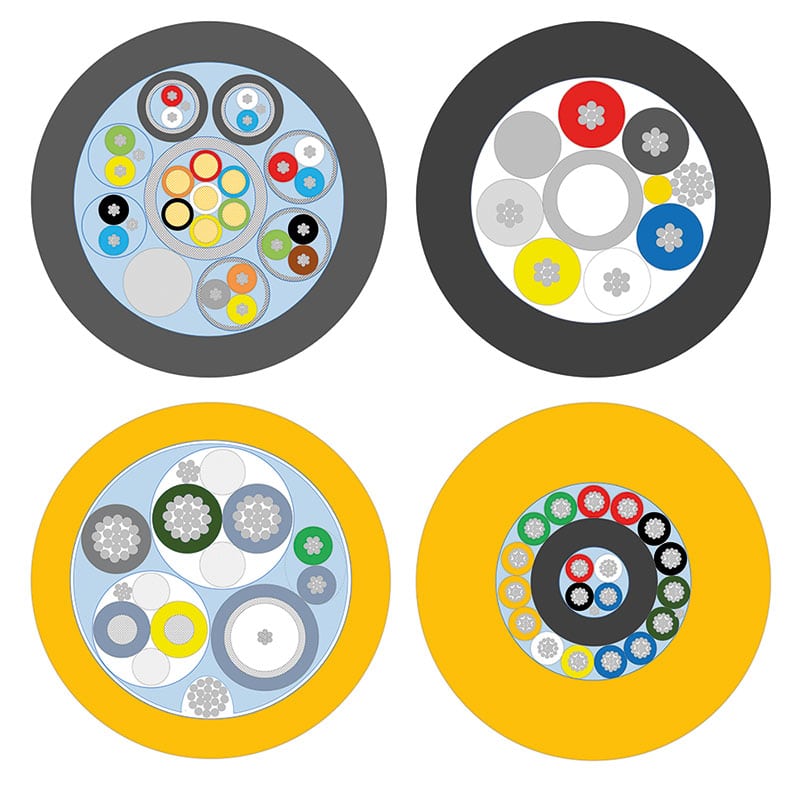
Custom cables can be designed to meet specific electrical, mechanical, and environmental requirements, offering higher reliability, precise fit, easier installation, and regulatory compliance.
When to Choose a Custom Cable
Custom cables allow you to get the best cable for your needs as they are tailored specifically to certain factors.
When Your Application Has Unique Requirements
Sometimes, standard cables are unable to meet your physical or functional needs. Standard cables are built to common specifications, meaning they won’t always accommodate your exact needs – whether that’s cable length, or unusual routing.
Precise cable length is often critical, as slack can lead to strain, tangling, and an increase in susceptibility to electromagnetic interference. Cable tightness can also create tension and an increase in wear and tear, leading to new potential failures and premature replacement.
When Operating in Harsh Environments
Standard cables are typically designed for mild conditions such as controlled environments. However, they frequently fail when exposed to more severe operating conditions, leading to degradation and failure.
Custom cables, on the other hand, allow you to select the materials tailored to your specific environment. This may involve specialist shielding designed to protect against electromagnetic or radio frequency interference, rugged jacketing to resist abrasion and chemical exposure, and reinforced construction for environments with severe vibration.
When High Performance and Signal Integrity are Critical
Standard cables don’t always provide the necessary specifications for certain electronics, high-speed data transmission, or substantial power delivery applications. Enhanced shielding and specialised cable construction help maintain signal integrity and reduce electromagnetic interference (EMI).
When Regulatory Compliance and Safety Are Non-Negotiable
Certain industries like automotive, aerospace, and defence all need certain certifications and enforce strict regulatory standards that standard cables may not meet. Custom cables can be made with materials such as:
- Flame-retardant compounds
- Low-smoke insulation
- Halogen-free materials
Custom cable manufacturing also offers full traceability, comprehensive documentation, and validation testing to verify adherence to relevant standards. Non-compliance in certain industries can be detrimental to product launches, so investing in custom cables helps to avoid risks.
When Production Volume Justifies the Investment
Although custom cables are typically higher in initial costs compared to standard cables, they often offer long-term return on investment for environments with medium to high production volume, as they eliminate the need for adapters, reduce cable lengths, and cut down manual assembly steps from the production process.
When is Standard Cable the Right Choice?
Although custom cables offer significant benefits to certain applications, they’re not always necessary.
When Your Requirements are Straightforward
Not every application has complex requirements for cables. So if your equipment uses common connectors, operates in controlled environments, or doesn’t require specialist characteristics, a standard cable will usually do the job. Standard cables are commonly used in office equipment, commercial electronics, networking equipment, and many industrial applications.
Speed is a Priority
One of the biggest benefits of standard cables is their availability, as they are mass-produced and held in stock by manufacturers and distributors, so they can be sourced immediately. This is valuable for when:
- Replacing a failed cable
- Completing urgent maintenance work
- Meeting tight project deadlines
- Supporting prototype or test builds
Custom cables require design, material sourcing, manufacturing, and testing before delivery, which can mean significant lead times. Therefore, if time is crucial and a standard cable meets requirements, it can be a great option to keep projects on track.
When Budget is Primary Consideration
Standard cables are less expensive than custom cables as they are produced in high volumes using standardised materials and manufacturing processes. For simple applications with no harsh conditions, a standard cable is a great budget-friendly option.
Looking for Standard or Custom Cables?
K. Lacey provides both standard and custom cable to help with different applications. Our team can assess your application, operating environment, and performance requirements to recommend the most suitable cable solution for your project.
At K. Lacey, we work closely with customers across a wide range of industries to deliver reliable, high-quality cable solutions that meet exact specifications.
Get in touch with K Lacey today to discuss your requirements and find the right cable for your application.