Choosing UK-manufactured cable for aerospace, defence and industrial applications ensures full traceability, compliance with industry standards, a more secure supply chain and more reliable lead times.
UK manufacturers work to rigorous aerospace standards such as AS9100, which requires documentation that allows each assembly to be traced back to its source. Producing domestically also protects supply against shipping and geopolitical disruption.
What Does “Made in Britain” Mean for Cable and Cable Assemblies?
Made in Britain labels can be confusing. So, allow us to clarify what “UK-made” means when applied to cables and cable assemblies, and what qualifies as “Made in Britain”.
UK-made wire means the wire itself, the conductor and its insulation, has been manufactured in the UK. For UK-made cable assemblies, the wire used may have come from the UK or overseas, but the finished product is built in the UK. This includes the wire and components being cut, stripped, crimped, soldered, fitted with connectors, labelled and tested by a UK manufacturer.
UK distributors supply from the UK, but they might hold stock sourced from UK, European or other international manufacturers.
To earn the mark “Made in Britain”, the finished product must be made in Britain. Not every component has to be made in the UK, but all labour on the finished product must have taken place here. This means a cable assembly can qualify as “Made in Britain”, even if some materials were imported, whereas imported cable distributed by a UK business would not.
In practice, most aerospace and defence projects combine all three. Wire is specified by its standards rather than its country of origin, so it may be sourced overseas. However, using a UK distributor and having the assembly handled by a UK manufacturer provides traceability, keeps the supply chain short and makes compliance simpler.
Why UK-Based Supply Matters in Aerospace and Defence
Aerospace and defence are best served by UK-based suppliers for cables and cable assembly for five key reasons –
Traceability
In aerospace and defence, every component must be documented and traced back to its origin. Records of each assembly’s materials, build and testing are required by industry standards, because a single faulty part can disable a critical system. Full traceability also protects against counterfeit parts entering the supply chain.
Certified UK suppliers provide this documentation as standard and, with far shorter supply chains, choosing a domestic supplier reduces the risk of records being lost or falsified.
Compliance
Cable assemblies in aerospace and defence are expected to meet a set of industry standards, most of which become mandatory through customer contracts. These include:
- AS9100 quality standard for manufacturers, almost always required by the aerospace sector (AS9120 for distributors)
- IPC/WHMA-A-620 workmanship standard, typically specified at Class 3 (the strictest level) for aerospace and defence assemblies
- Wire and cable specifications to British standards, required when named in a customer’s drawing or contract
- Cyber Essentials, the minimum requirement for MOD contracts involving MOD information
Several of these standards are UK-specific, so UK suppliers are familiar with them and likely to hold relevant certifications, as K Lacey does.
Compliance is checked through regular audits, which are far easier to carry out in person with a UK-based supplier.
Supply Chain Security
When sourcing internationally, geopolitical risks, including conflicts, sanctions and trade disputes, can disrupt supply chains. Export controls can also see overseas supply for defence-related components delayed or even blocked by licensing rules.
Choosing UK wire and cable suppliers protects supply chains from these risks. It also reduces the risk of documentation being lost or falsified and keeps sensitive design information within UK security and legal frameworks.
The Defence Industrial Strategy 2025 also prioritises UK-based production so the UK can supply its own armed forces without relying on other nations, particularly during a crisis.
Lead Times
Sourcing cable assemblies from overseas often means weeks of shipping and customs clearance, and any disruption in transit can push delivery dates back further. For aerospace and defence programmes working to tight production schedules, these delays can hold up entire projects.
With UK suppliers, you avoid long transit times, and many UK suppliers also hold stock of approved wire and cable for fast dispatch. This means your cable assembly supplier is far more likely to accommodate urgent orders, small batches and short-notice changes.
Working in the same time zone also speeds up communication, so technical queries, design changes and prototype revisions can be resolved quickly, keeping projects on schedule.
Standards and Approvals to Look For
Standard | What it covers | Why it matters to the buyer |
AS9100 | The aerospace quality management standard for manufacturers. | It confirms the supplier controls every stage of production to meet aerospace requirements. |
AS9120 | The aerospace quality management standard for distributors. | It ensures stocked parts are genuine, correctly stored and fully traceable to the source. |
ISO 9001 | The general International standard for quality management. | It shows the business runs consistent, documented processes, forming the foundation for AS9100 and AS9120. |
IPC/WHMA-A-620 | The workmanship standard for building cable and wire harness assemblies. | It defines what an acceptable crimp, solder joint or harness looks like, so quality can be checked objectively. |
K Lacey has held BSI compliance since 1983. Find out more about our Quality Assurance.
UK Cable Manufacturing Across Three Sectors
Aerospace cable is specialised wiring, built to withstand high temperatures and extreme environmental conditions. As well as being durable, it must be lightweight, as every kilogram on board an aircraft adds to fuel burn. Regular cable typically lacks the specialisation required for aerospace applications. K Lacey supplies RoHS-compliant aerospace cables manufactured to stringent international quality standards, including IEC and MIL-DTL.
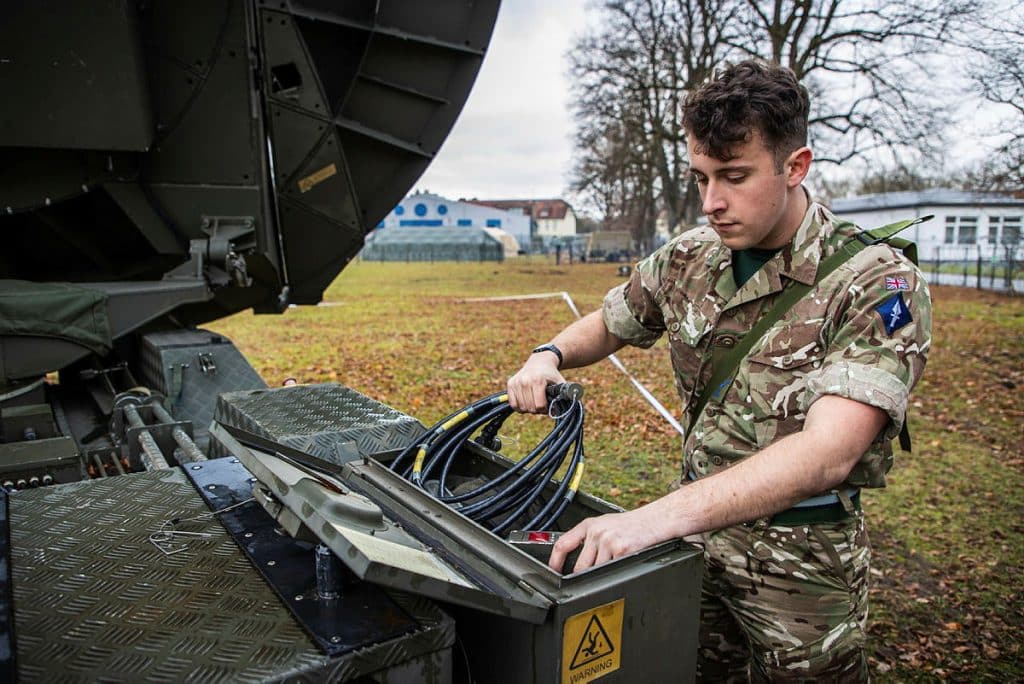
Military cable is specialised, designed to be durable and able to perform in rugged environments. Built to withstand extreme temperatures, moisture, chemical exposure and rough terrain, cables for military use are often made with specific materials and must meet stringent military standards. K Lacey provides military cables with reliable signal and power delivery, shielded against electromagnetic and radio frequency interference. These are used in critical applications such as communications, navigation and weapon systems.
Industrial environments require specialised electrical cables designed for durability, flexibility, heat and moisture resistance and the ability to cope with mechanical stress. Used in environments that are often severe and hazardous, they must meet strict safety standards. K Lacey’s industrial cables meet IEC and UL standards and are RoHS compliant, engineered for reliable performance and to prevent electrical faults.
How K Lacey Supports UK-Based Projects
With over 50 years’ experience in cable and wire distribution, we can now also manufacture cable assemblies from our in-house cable and wiring facility in Rustington, West Sussex. We are partnered with many UK manufacturers, including Amokabel, Heatsense and Permanoid and are able to offer same-day dispatch on stock items. Turnaround for cable assembly is around 6-8 weeks (subject to component availability) and for custom cables is 8-20 weeks.
We work across a wide range of sectors, but specialise in UK Wire and Cable Manufacturing for Aerospace, Defence and Industrial Applications.
Looking for a UK-based partner for your wire and cable supply or manufacturing of cable assemblies? Reach out to K Lacey for expert assistance, whatever your project.
Frequently Asked Questions
Why choose UK-made cable for aerospace and defence?
UK-made cable offers full traceability, a more secure supply chain and reliable lead times. UK companies are also more likely to be familiar with and able to meet UK compliance and industry standards.
What standards should a UK cable supplier hold for aerospace work?
AS9100 for manufacturers or AS9120 for distributors, with assemblies typically built to IPC/WHMA-A-620 Class 2. For defence work involving MOD information, Cyber Essentials is also required.
What is the difference between UK-made cable and UK-made cable assemblies?
The wire itself must be manufactured in Britain for a cable to be UK-made. For UK-made cable assemblies, the finished product, including build, labelling and testing, must be carried out in the UK, though parts may be sourced internationally.