
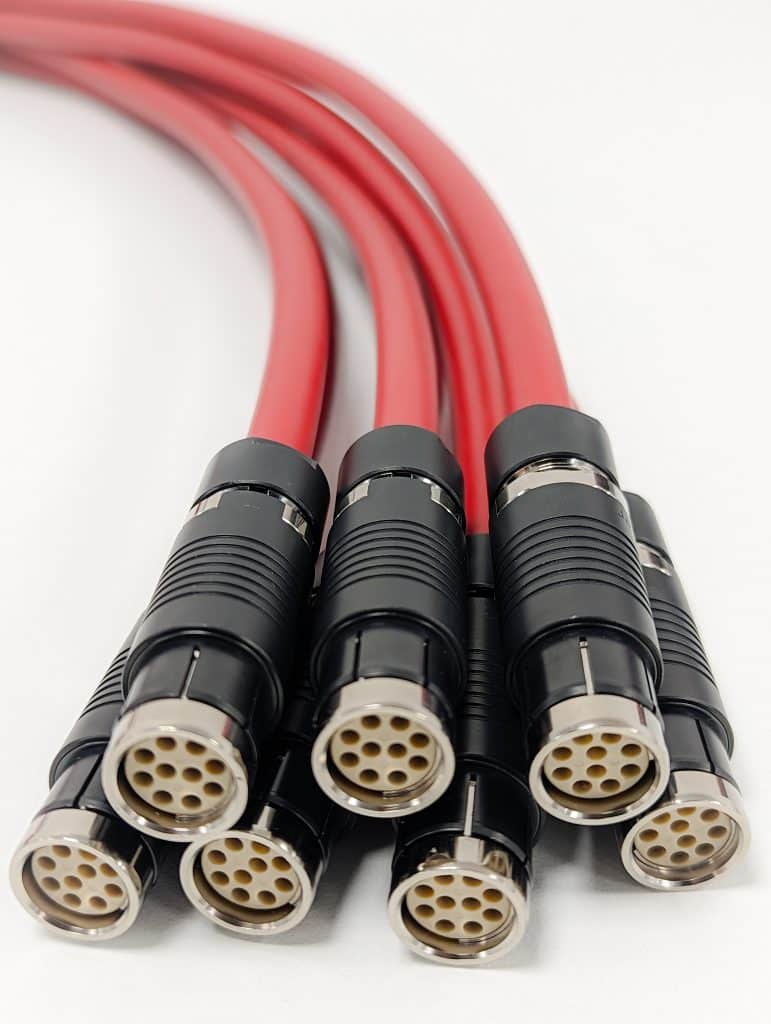
Modern machines, automated systems, and safety equipment all rely on sensors. Hundreds of sensors are used in applications like factories to measure temperature, position, speed, and proximity and feed this vital data to controllers almost instantly. However, the sensors can’t transmit this data by themselves; they need specialised cables to do this. In this blog, we will discuss the importance of sensor cables and how they work in practice.
What are Sensor Cables?
Sensor cables are used to transmit data, power, and signals between sensors and actuators. They essentially act as the ‘nervous system’ in automation.
Sensor cables aren’t a power cable; they aren’t a standard cable like Ethernet, and they aren’t engineered for electrical noise resistance and flexibility. They are a low-voltage signal cable that is specially designed to transmit data or signals between sensors and systems.
What are Sensor Cables Used For?
From factory floors to wind turbines, processing lines to rail networks, sensor cables are pretty much used everywhere. They are the vital link between a sensor (which detects changes) and a control system (which interprets the change and takes action). Without reliable sensor cables, advanced systems are only half-functional.
How Do Sensor Cables Work?
A sensor is used to detect a condition, such as temperature, pressure, movement, proximity, or vibration, and then converts this into an electrical signal.
The signal is carried to a controller, PLC, or monitoring system and will either trigger an alarm, adjust machinery speed, shut down equipment, or send data for analysis.
Sensor cables are therefore incredibly important, but because of their low-voltage signals, they must protect against:
- Electromagnetic interference
- Signal loss
- Harsh conditions
- Mechanical stress.
Types of Sensor Cables
Sensor cables vary depending on the application, environment, and signal type. However, some common types include:
Automation
Automation systems link sensors, actuators, and controllers to ensure real-time data transfer and enable automated processes. Consistent signal performance is essential in environments such as production line monitoring, robotic operations, and industrial machinery control, and sensor cables help to ensure consistent optimal performance.
Control Applications
Sensor cables used in control applications are designed to transmit low-voltage control signals between system components. They are engineered to support high-frequency signal transmission while preserving signal integrity to ensure precise and stable operation of control systems.
Pressure
Pressure sensor cables connect pressure transducers and sensors that measure and relay pressure data. Pressure sensing usually happens in demanding conditions, but these cables are designed for durability and resistance to environmental fluctuations, mechanical stress, and vibrations.
Proximity
Proximity sensor cables detect the presence of movement of objects without needing any physical contact. They’re commonly used in robotics, manufacturing, and security systems to provide dependable signal transmission.
How Are Sensor Cables Used in Modern Systems?
Sensor cables are vital in modern systems as they are the communication link between sensors and control equipment in electrical and electronic systems. Sensors detect physical conditions, and the cable carries this data to the controller.
Sensor cables are used widely in modern industries, including:
- Industrial automation – sensor cables connect sensors to PLCs and control panels for monitoring and control.
- Robotics – robotic systems rely on precise sensor feedback to control movement, positioning, and safety.
- Manufacturing and production – modern production lines use extensive sensor networks to monitor performance, detect faults, and, overall, maintain quality. Sensor cables can help track variables in conveyor systems, CNC machines, and assembly lines.
- Automotive – modern vehicles and transport systems incorporate large numbers of sensors for monitoring, diagnostics, and safety. Sensor cables transmit signals for engine management, brakes, speed sensing, and more.
Why Are Sensor Cables Important?
Although they are often overlooked, sensor cables are a critical part of modern systems. This is because:
- They ensure signal integrity and accuracy – sensor cables ensure accurate data transmission by preventing interference from motors, drives, and other equipment. This is down to their proper shielding.
- They are incredibly reliable – cable failures can lead to incorrect readings, unstable system behaviour, and machine downtime. High-quality sensor cables reduce the risk of these happening.
- They ensure performance in demanding environments – modern systems tend to operate in harsh conditions that involve movements, vibrations, mechanical stress, or extreme temperatures. Sensor cables are designed to endure these challenges whilst maintaining optimal performance.
Looking for Reliable Sensor Cables?
If you’re looking for a reliable, high-quality sensor cable, we can help. At K. Lacey, we offer a wide range of shielded, flexible, and durable sensor cables designed for every application. Browse our range online now or contact us for advice or more information.